
Transformational leadership
Preach for Better Life– Timeless Leadership: Insights from Indian Philosophy –
Transformational leadership is a leadership style where leaders inspire and motivate their followers to achieve extraordinary outcomes and, in the process, develop their own leadership potential. It focuses on creating positive change within an organization by encouraging innovation, fostering a shared vision, and empowering individuals to reach their full potential. Here’s a breakdown of key aspects:
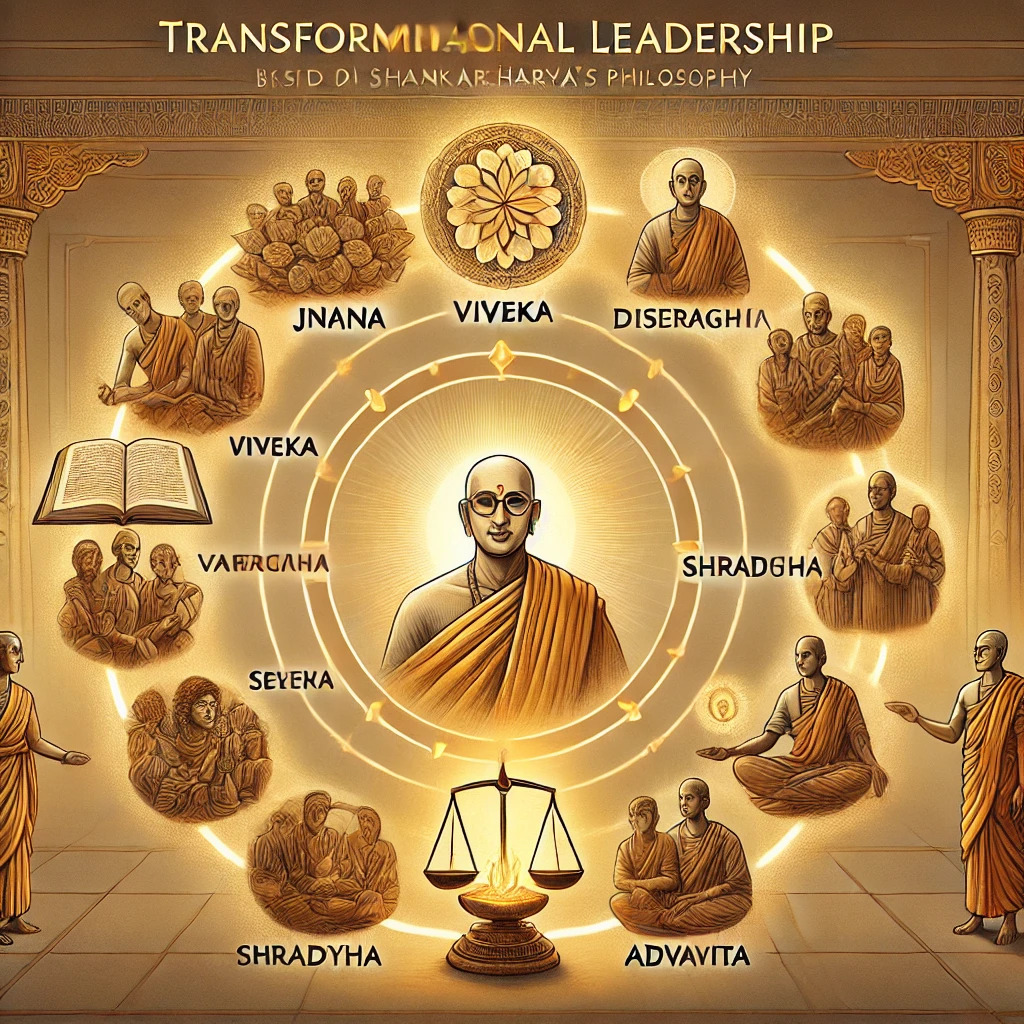
- Jnana (Knowledge & Wisdom) – A leader must seek truth and deep understanding.
- Viveka (Discernment & Decision-Making) – The ability to differentiate between right and wrong.
- Vairagya (Detachment & Selflessness) – Leading without ego and personal gain.
- Shraddha (Faith & Conviction) – Strong belief in vision and purpose.
- Seva (Selfless Service) – Serving society and team with dedication.
- Guru-Bhakti (Respect for Learning & Mentorship) – Valuing continuous learning and guidance.
- Advaita (Oneness & Inclusivity) – Creating unity and harmony in leadership.
In this dynamic era, we must cultivate leaders and uncover leadership potential in ordinary individuals. Unlocking human potential is a challenging task, as it involves transforming ordinary individuals into extraordinary entities. This concept is encapsulated in the “Caterpillar to Butterfly” leadership model, which emphasizes discovering and nurturing the extraordinary qualities within common people, ultimately transforming them into exceptional leaders.
History demonstrates that most great leaders did not initially possess extraordinary qualities; rather, certain circumstances or pivotal events in their lives led to their transformation. These moments marked the turning points in their leadership journeys.
We define the three C’s of leadership as follows:
- Commitment – A leader must be fully committed to a goal. Without genuine commitment, inspiring followers becomes nearly impossible. A leader’s actions must reflect this dedication, guiding followers toward a shared vision.
- Concern – A leader must demonstrate genuine concern for people. While traditional leadership emphasized authority, contemporary leadership involves emerging as a leader from ordinary circumstances, guided by empathy and responsibility.
- Collective Effort – Leadership thrives through collaboration. Leaders succeed because followers exist, and this interdependence cannot be overlooked. A leader must recognize the value of collective effort and acknowledge the contributions of followers.
Transformational Leadership Based on Adi Shankaracharya’s Philosophy
- Self-Realization and Inner Transformation (Leading by Example)
Adi Shankaracharya’s central teaching was that the true nature of reality is beyond the material world. He encouraged individuals to recognize their true self (Atman) and transcend the illusion (Maya) of the physical world. - Equanimity and Emotional Intelligence (Balancing Emotions and Leadership)
Shankaracharya’s teachings emphasize maintaining equanimity, or mental balance and detachment from external fluctuations, as key to self-realization. This allows one to act with calmness and clarity even in challenging situations. - Empathy and Compassion (Individualized Consideration)
Shankaracharya’s philosophy calls for deep compassion for all living beings, understanding that at the core, all beings are manifestations of the same ultimate reality. In the same way, a transformational leader, guided by this philosophy, would demonstrate genuine care for the personal and professional well-being of their team members.